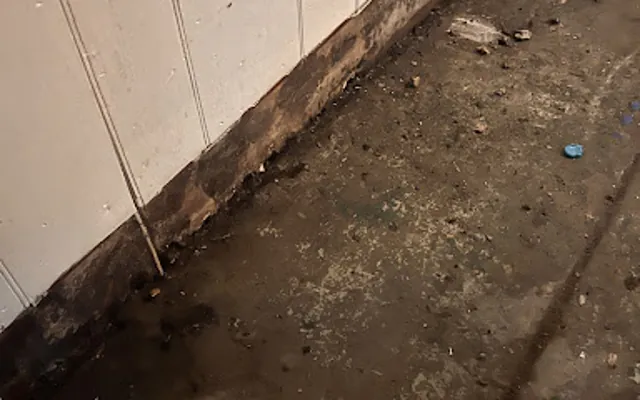
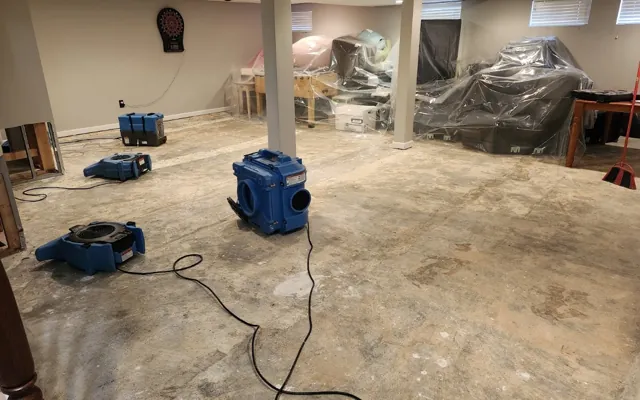
When a drain backup hits a Ballpark, UT basement, local crews respond fast to extract the contaminated water and start drying, following IICRC-standard methods to protect the home.

Technicians first isolate the affected Ballpark basement to prevent cross contamination. They use truck-mounted extractors to remove all the contaminated water, protecting clean areas of the home from the backup.
The crew carefully removes and disposes of porous materials like carpet and drywall that the backup soaked. All remaining hard surfaces are then cleaned and treated with antimicrobial solutions for safety.
Using air movers and dehumidifiers placed strategically throughout the space, the team dries the slab and framing. They take documented moisture readings to confirm everything meets the dry standard before finishing.

Drain backup cleanup in Ballpark typically runs $1,800 to $7,000, driven by how far the contaminated water spread, how much porous material must be removed, and the extent of disinfection needed. A basement backup that soaked finished space costs more than a small utility area. Crews document the source and readings so the carrier has clear evidence, since backup coverage often depends on an added endorsement.
Ballpark's older cottages and infill homes often sit on a high water table with aging sewer lines, making basement drain backups a real concern. When contaminated water rises from a main line clog or heavy inflow, it can quickly soak finished spaces and stored belongings, requiring immediate action. In Ballpark, UT, backups often stem from older neighborhood sewer lines, a high water table that puts pressure on basement drains, and winter cold snaps that can cause pipe issues leading to blockages. From Ballpark, crews also cover nearby Capitol Hill, East Central, The Avenues, Central City, Fairpark, Liberty Wells. See every neighborhood and town on the full service area page.
See all areas servedEvery loss is photographed, measured, and logged from the first visit, so the paperwork holds up with the insurance carrier.
Technicians follow recognized IICRC drying standards and prove it with daily moisture readings on Ballpark homes, not guesswork.
Emergency dispatch any hour of the day or night, with a real crew on the way across the valley, not a callback in the morning.
A real crew dispatched any hour, not a callback in the morning.
Trained technicians following recognized IICRC drying standards.
Truck-mounted, portable, and submersible for any size loss.
The loss is documented and billed to the carrier directly.
In the Ballpark area, common causes include blockages in older sewer lines shared with the municipal system, a high water table putting pressure on basement drains during spring thaw, and root intrusion into aging pipes. Heavy usage or sudden inflows can then push contaminated water back up through the lowest drains.
The timeline depends on the extent of the water spread and the materials affected. A confined backup in a Ballpark utility room may take a couple of days to dry. If it soaks a finished basement with carpet and drywall, the process of removal, disinfection, and drying often takes several days to a week to complete properly.
Crews are on call 24 hours a day and can be on the way to Ballpark within the hour.
Call (801) 405-4247