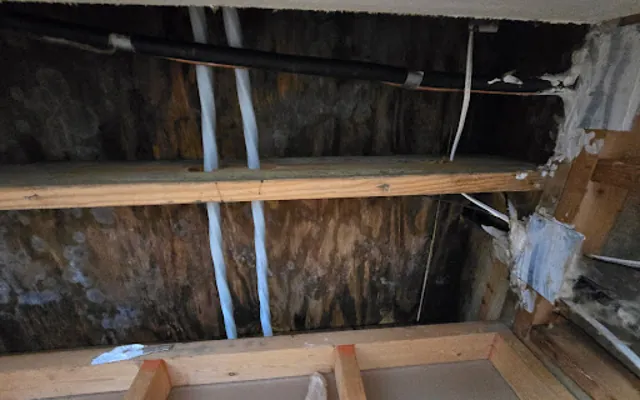
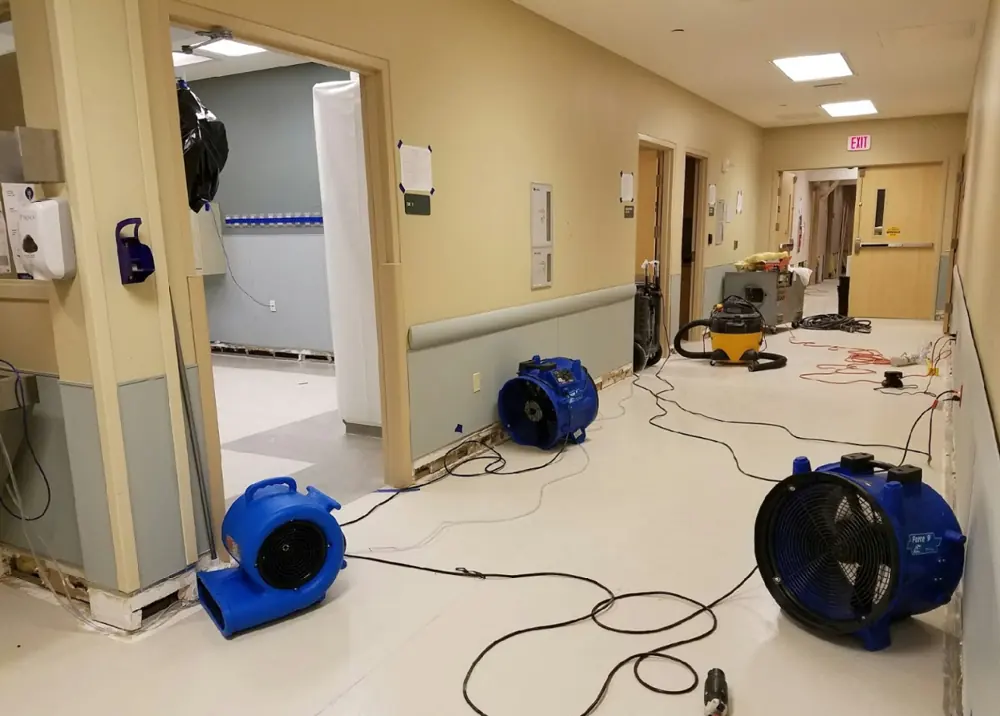
Heavy snow, wind, and worn flashing let water through Salt Lake City roofs into attics and ceilings. Crews respond fast to dry the structure to IICRC-standard before the damage spreads and mold begins.

Technicians trace the interior water back toward the entry point, extract standing water, and take steps to limit further intrusion while the roof is addressed.
Crews open saturated ceilings and attic areas, remove wet insulation and failed drywall, and map how far the water traveled from the leak.
Air movers and dehumidifiers dry the framing, insulation cavities, and ceilings, with moisture readings tracking each area to a documented dry standard.
Once dry, crews rebuild finishes and can coordinate the roof repair with a qualified roofing contractor so the same leak does not return.

While help is on the way, these first steps, done only where it is safe, limit the damage and protect the insurance claim.
Shut the supply off at the source, or close the home's main valve if the source is not obvious. Stopping the flow limits the damage more than anything else.
Switch off electricity to the affected area, but only if the breaker can be reached without standing in or touching the water.
Get a crew dispatched right away. The sooner extraction and drying begin, the more flooring, drywall, and belongings can be saved.
Take photos and a short video of the water and the affected rooms before anything is moved, so the insurance claim starts strong.
Roof leak water damage in Salt Lake City generally runs $1,500 to $7,500, depending on how much water entered, how far it spread through the attic and ceilings, and whether insulation and drywall must be replaced. A minor flashing leak costs far less than water tracking across several rooms. Crews document the source and moisture readings so a sudden covered event is clearly recorded for the carrier.
Crews reach Salt Lake City and the surrounding valley fast, from Sugar House, The Avenues, and Capitol Hill to Millcreek, Murray, Holladay, West Valley City, and Sandy. See the full list on the areas served across Salt Lake City page.
See all areas servedEvery loss is photographed, measured, and logged from the first visit, so the paperwork holds up with the insurance carrier.
Technicians follow recognized IICRC drying standards and prove it with daily moisture readings on Salt Lake City homes, not guesswork.
Emergency dispatch any hour of the day or night, with a real crew on the way across the valley, not a callback in the morning.
A real crew dispatched any hour, not a callback in the morning.
Trained technicians following recognized IICRC drying standards.
Truck-mounted, portable, and submersible for any size loss.
The loss is documented and billed to the carrier directly.
It is often hard to tell from inside, because water travels along the framing before it drips through a ceiling far from the entry point. Crews trace the wettest path back toward the source and check the flashing, valleys, and penetrations that fail first on valley roofs.
The interior water needs to be extracted and dried right away to prevent mold and further damage, while the roof itself should be repaired by a qualified roofer to stop the source. Crews handle the drying and coordinate timing so both get addressed without conflict.
Yes. Wet attic insulation and framing create ideal conditions for mold within a couple of days. Fast removal of saturated material and controlled drying to a documented standard is the best way to keep a roof leak from turning into a mold remediation project.
Sudden storm or snow related interior water damage is typically covered, while a leak from long term wear may be questioned. Crews document the source, the water path, and moisture readings so the carrier has clear evidence of the covered water intrusion.
Salt Lake City crews are on call 24 hours a day, local and fast, and can be on the way within the hour.
Call (801) 405-4247