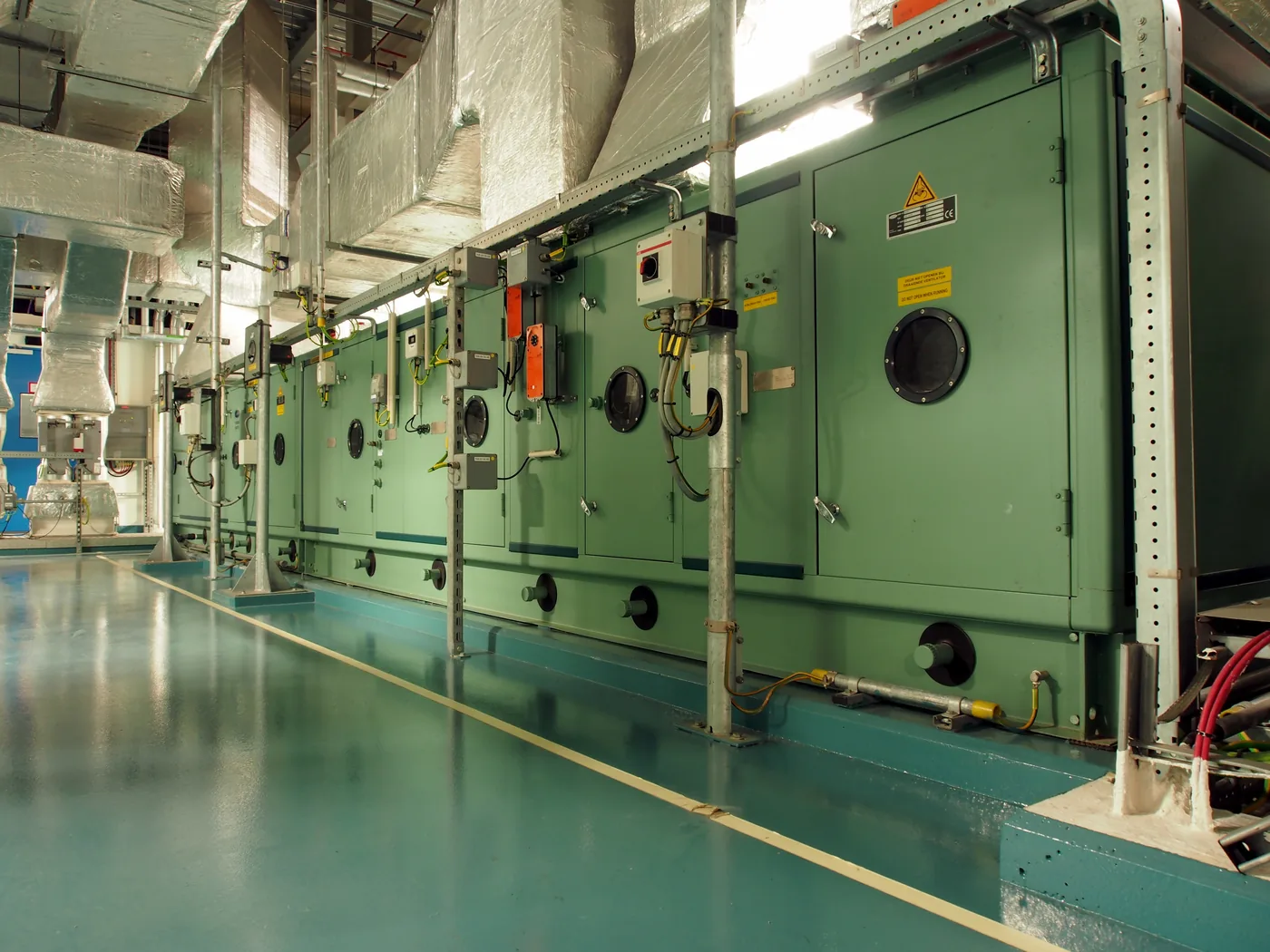
Rooftop evaporative coolers are common across Salt Lake City, and a cracked line or overflowing pan can send water through the roof into ceilings. Crews dry the structure to IICRC-standard fast.

Technicians confirm the cooler and its water supply are shut off, then trace how far the leak traveled across the attic and into the ceilings and walls below.
Crews extract pooled water, remove saturated attic insulation, and take out ceiling material that cannot be dried in place.
Air movers and dehumidifiers dry the attic floor, framing, and ceilings, with moisture readings tracking each area to a documented dry standard.
Once dry, crews rebuild ceilings and reinsulate, and can coordinate the cooler repair or winterizing with a qualified HVAC contractor.

While help is on the way, these first steps, done only where it is safe, limit the damage and protect the insurance claim.
Shut the supply off at the source, or close the home's main valve if the source is not obvious. Stopping the flow limits the damage more than anything else.
Switch off electricity to the affected area, but only if the breaker can be reached without standing in or touching the water.
Get a crew dispatched right away. The sooner extraction and drying begin, the more flooring, drywall, and belongings can be saved.
Take photos and a short video of the water and the affected rooms before anything is moved, so the insurance claim starts strong.
Swamp cooler leak damage in Salt Lake City typically runs $1,000 to $5,000, depending on how long the cooler leaked, how much insulation and ceiling were soaked, and whether framing needs treatment. A caught float overflow costs far less than a cracked line that ran for days. Crews document the source and moisture readings so a sudden covered event is clearly supported for the carrier.
Crews reach Salt Lake City and the surrounding valley fast, from Sugar House, The Avenues, and Capitol Hill to Millcreek, Murray, Holladay, West Valley City, and Sandy. See the full list on the areas served across Salt Lake City page.
See all areas servedEvery loss is photographed, measured, and logged from the first visit, so the paperwork holds up with the insurance carrier.
Technicians follow recognized IICRC drying standards and prove it with daily moisture readings on Salt Lake City homes, not guesswork.
Emergency dispatch any hour of the day or night, with a real crew on the way across the valley, not a callback in the morning.
A real crew dispatched any hour, not a callback in the morning.
Trained technicians following recognized IICRC drying standards.
Truck-mounted, portable, and submersible for any size loss.
The loss is documented and billed to the carrier directly.
Because they are common on Salt Lake City roofs and run a lot of water through pans, lines, and float valves all season. Hard water corrosion, stuck floats, and lines that crack when they are not drained for winter all create leaks, and the rooftop location sends that water straight into the ceiling.
Cooler leaks usually show up during cooling season, near the ceiling area below the unit, while the roof is dry. Crews trace the wettest path back to the source and check the pan, float, and supply line to confirm whether the cooler or the roof is responsible.
Crews handle the water extraction, drying, and restoration of the damaged ceilings and insulation. Repairing the float valve, pan, or supply line and winterizing the cooler is done by a qualified HVAC contractor, and crews coordinate so the area is dry before repairs.
Draining and winterizing the cooler and its line each fall, servicing the float valve, and checking the pan and connections before starting up in spring all help. Crews can point out where the water entered so a qualified contractor can address the specific weak point.
Salt Lake City crews are on call 24 hours a day, local and fast, and can be on the way within the hour.
Call (801) 405-4247