In a Salt Lake City freeze, a frozen pipe can split and flood a home the moment it thaws. Crews respond fast to extract the water and dry the structure to IICRC-standard before mold takes hold.

Technicians confirm the main is off, then extract standing water from every affected level before it wicks further into framing and finishes.
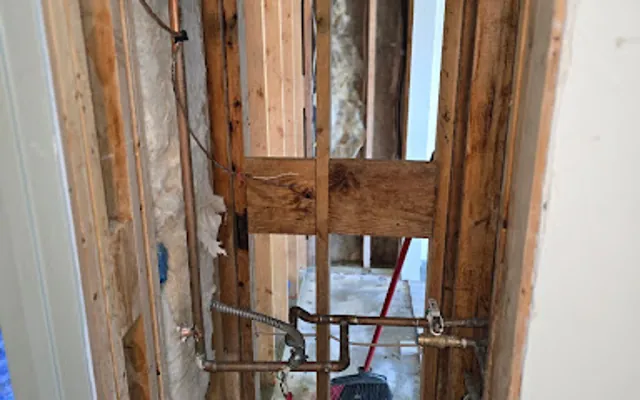
Crews open the wall, ceiling, or crawlspace to reach the split line, remove saturated insulation, and map how far the released water traveled.
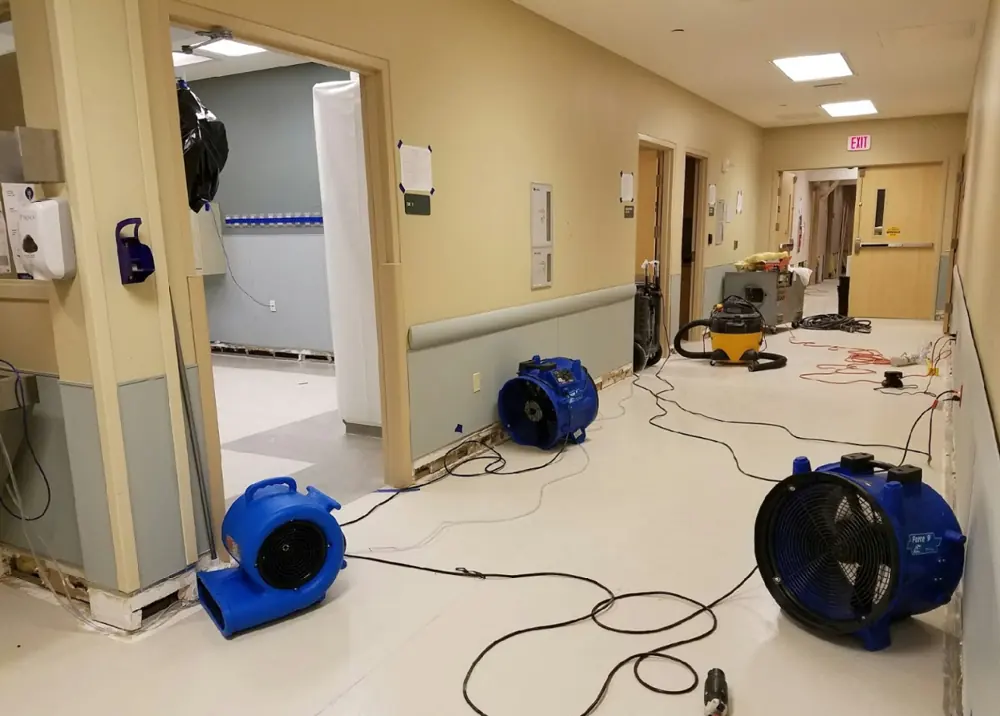
Air movers and dehumidifiers dry the framing, subfloor, and cavities, with daily moisture readings tracking each area to a documented dry standard.
Once dry, crews rebuild finishes and can coordinate the pipe repair, and point out exposed runs a qualified plumber can insulate against the next freeze.

While help is on the way, these first steps, done only where it is safe, limit the damage and protect the insurance claim.
Shut the supply off at the source, or close the home's main valve if the source is not obvious. Stopping the flow limits the damage more than anything else.
Switch off electricity to the affected area, but only if the breaker can be reached without standing in or touching the water.
Get a crew dispatched right away. The sooner extraction and drying begin, the more flooring, drywall, and belongings can be saved.
Take photos and a short video of the water and the affected rooms before anything is moved, so the insurance claim starts strong.
Frozen pipe water damage in Salt Lake City generally runs $2,500 to $9,500, depending on how long the thawed line released water, how many levels were affected, and whether flooring and cabinetry were soaked. A break caught at first thaw costs far less than one that ran while a home sat empty. Insurance typically covers a sudden freeze rupture, and crews document everything for the adjuster.
Crews reach Salt Lake City and the surrounding valley fast, from Sugar House, The Avenues, and Capitol Hill to Millcreek, Murray, Holladay, West Valley City, and Sandy. See the full list on the areas served across Salt Lake City page.
See all areas servedEvery loss is photographed, measured, and logged from the first visit, so the paperwork holds up with the insurance carrier.
Technicians follow recognized IICRC drying standards and prove it with daily moisture readings on Salt Lake City homes, not guesswork.
Emergency dispatch any hour of the day or night, with a real crew on the way across the valley, not a callback in the morning.
A real crew dispatched any hour, not a callback in the morning.
Trained technicians following recognized IICRC drying standards.
Truck-mounted, portable, and submersible for any size loss.
The loss is documented and billed to the carrier directly.
Shut off the main water supply, then warm the area gently with the heat on and cabinet doors open, never with an open flame. If the pipe has already split, keep the main off and call for help, because it will release water as soon as it thaws.
The ice that cracks a pipe also plugs the split while it stays frozen. When temperatures rise and the ice melts, the crack opens and pressurized water flows. That is why so many Salt Lake City frozen pipe floods appear on the first warm day after a cold snap.
Lines in exterior walls, attics, crawlspaces, and along the basement rim joist freeze first because they sit in unheated space. The aging plumbing in older homes is especially vulnerable, which is why crews point out exposed runs for a plumber to insulate after a repair.
A sudden freeze rupture and the resulting water damage are usually covered, though carriers may ask whether reasonable heat was maintained. Crews document the cause, the water path, and moisture readings so the claim has clear supporting evidence.
Salt Lake City crews are on call 24 hours a day, local and fast, and can be on the way within the hour.
Call (801) 405-4247