Standing water needs to come out fast, before it wicks into framing and floors across a Salt Lake City home. Crews respond quickly with IICRC-standard extraction and structural drying from any source.

Technicians identify the water source and category, map how far it has spread, and prioritize the extraction to stop it reaching more of the structure.
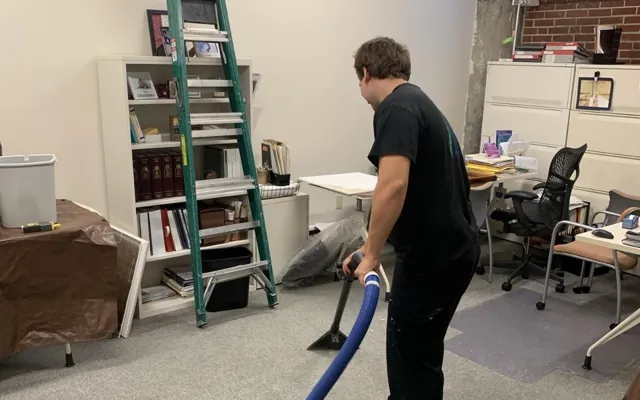
Truck mounted and portable extractors remove standing water from carpet, hard floors, and low spaces quickly, pulling out far more than surface mopping can.
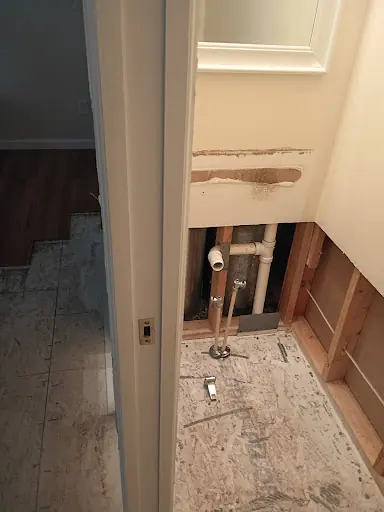
Crews use meters and observation to find water hidden in walls, subfloor, and cavities so no saturated area is missed before drying begins.
With the standing water out, air movers and dehumidifiers are set to dry the structure to a documented dry standard, with readings tracked daily.

While help is on the way, these first steps, done only where it is safe, limit the damage and protect the insurance claim.
Shut the supply off at the source, or close the home's main valve if the source is not obvious. Stopping the flow limits the damage more than anything else.
Switch off electricity to the affected area, but only if the breaker can be reached without standing in or touching the water.
Get a crew dispatched right away. The sooner extraction and drying begin, the more flooring, drywall, and belongings can be saved.
Take photos and a short video of the water and the affected rooms before anything is moved, so the insurance claim starts strong.
Water extraction in Salt Lake City generally runs $500 to $3,500 for the extraction phase, depending on the volume of water, the area affected, and whether the water was clean or contaminated. Extraction is usually the first part of a larger drying and restoration cost. Crews document the source and moisture readings from the start so a sudden covered event is clearly recorded for the carrier.
Crews reach Salt Lake City and the surrounding valley fast, from Sugar House, The Avenues, and Capitol Hill to Millcreek, Murray, Holladay, West Valley City, and Sandy. See the full list on the areas served across Salt Lake City page.
See all areas servedEvery loss is photographed, measured, and logged from the first visit, so the paperwork holds up with the insurance carrier.
Technicians follow recognized IICRC drying standards and prove it with daily moisture readings on Salt Lake City homes, not guesswork.
Emergency dispatch any hour of the day or night, with a real crew on the way across the valley, not a callback in the morning.
A real crew dispatched any hour, not a callback in the morning.
Trained technicians following recognized IICRC drying standards.
Truck-mounted, portable, and submersible for any size loss.
The loss is documented and billed to the carrier directly.
As soon as possible. Water wicks into framing and finishes and spreads through the structure by the hour, and mold can begin within a day or two. Fast extraction limits how deep the water penetrates and how much material ultimately has to be removed and replaced.
No. Extraction removes the standing and absorbed water quickly, while drying uses air movers and dehumidifiers to pull the remaining moisture out of the structure over the following days. Extraction comes first and makes the drying phase faster and more effective.
A shop vacuum helps with small spills, but it cannot match the volume and depth that truck mounted and professional portable extractors reach, especially in carpet, pad, and low spaces. Faster, deeper extraction means less soaked material and a shorter drying process overall.
When the water comes from a sudden covered event, the extraction and drying are typically part of the covered claim. Crews document the source, the extent of the water, and moisture readings from the first visit so the carrier has clear supporting evidence.
Salt Lake City crews are on call 24 hours a day, local and fast, and can be on the way within the hour.
Call (801) 405-4247