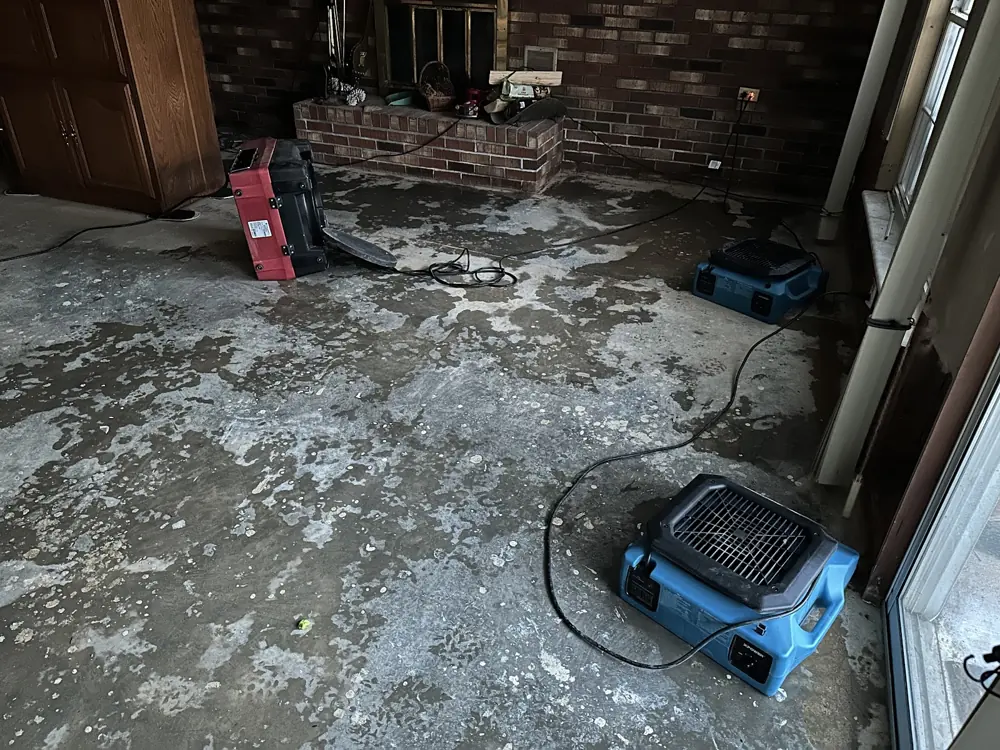
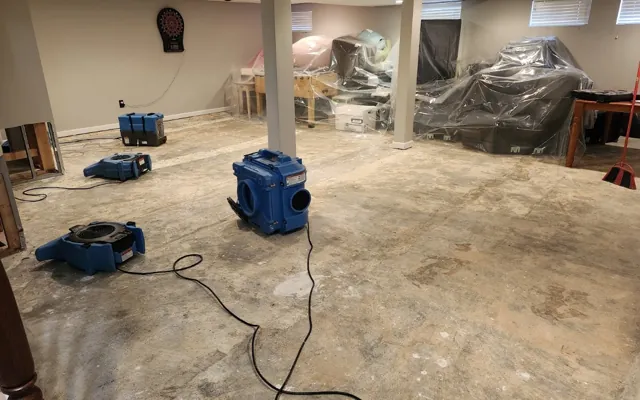
When a garage in Taylorsville, UT floods from a burst line or spring melt, local crews can respond fast. Their IICRC-standard methods extract water and dry the slab, helping prevent damage from spreading into the attached home.

Technicians first extract any standing water from the Taylorsville garage's concrete slab. They help move stored items to a dry area, quickly sorting what can be saved from materials too soaked to keep, like saturated cardboard boxes.
The crew identifies if the water came from a burst pipe, a water heater failure, or snowmelt intrusion. They confirm the flow is stopped, a critical step before drying begins, especially after a hard freeze in the area.
Industrial air movers and dehumidifiers are placed to dry the slab, lower drywall, and the shared wall with the home. Moisture readings are tracked until everything meets the dry standard for the Salt Lake Valley climate.

Garage water damage in Taylorsville typically runs $900 to $4,500, depending on how much water reached the slab, whether it migrated into the attached home, and if drywall and insulation must be replaced. A quick snowmelt puddle costs far less than a water heater failure that soaked a shared wall. Crews document the source and readings so a sudden covered event is clearly supported for the carrier.
In Taylorsville, many homes built in the 1970s and 80s sit on flat valley land with full basements. This, combined with a high water table, makes attached garages vulnerable. Spring snowmelt can seep in, and hard winter freezes risk splitting supply lines in unheated spaces, sending water across the concrete slab. The flat valley floor and older home foundations in Taylorsville, UT expose basements and garages to seepage. Spring snowmelt raises the water table, and the area's cold, hard winter freezes frequently split pipes in exterior walls and unheated spaces. From Taylorsville, crews also cover nearby Holladay, Woods Cross, West Valley City, Murray, Emigration Canyon, East Millcreek. See every neighborhood and town on the full service area page.
See all areas servedEvery loss is photographed, measured, and logged from the first visit, so the paperwork holds up with the insurance carrier.
Technicians follow recognized IICRC drying standards and prove it with daily moisture readings on Taylorsville homes, not guesswork.
Emergency dispatch any hour of the day or night, with a real crew on the way across the valley, not a callback in the morning.
A real crew dispatched any hour, not a callback in the morning.
Trained technicians following recognized IICRC drying standards.
Truck-mounted, portable, and submersible for any size loss.
The loss is documented and billed to the carrier directly.
In Taylorsville, UT, common causes are split water supply lines from winter freezes in unheated garage walls, water heater failures, and spring snowmelt intrusion. The flat terrain and high water table in these older subdivisions make seepage during the thaw a frequent issue for garages on slabs.
Drying time depends on the water volume and whether it reached drywall. For a typical slab flood in Taylorsville, crews often need 2 to 4 days of focused drying with industrial equipment. They track progress with moisture meters and only consider the job complete when readings meet the dry standard.
Crews are on call 24 hours a day and can be on the way to Taylorsville within the hour.
Call (801) 405-4247