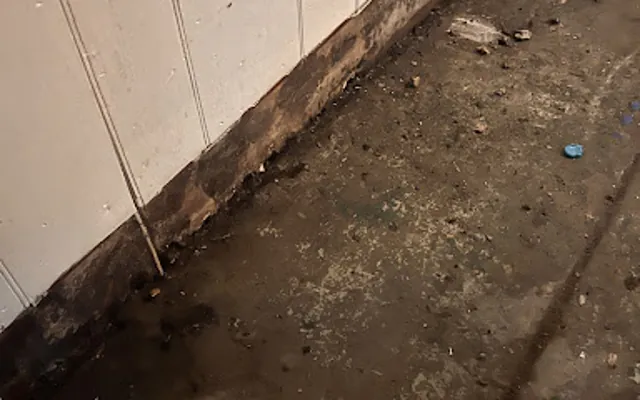
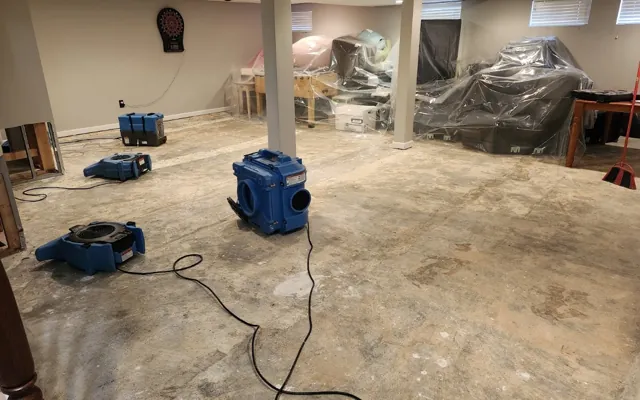
When a septic tank backup floods a Holladay, UT home, local crews respond fast to contain the mess. They follow IICRC-standard methods for safe water extraction, disinfection, and measured drying, crucial for the area's finished basements.

Technicians first contain the affected Holladay basement or utility room to prevent cross contamination. They then use dedicated pumps and extractors to remove all standing contaminated water from the slab and surrounding areas.
Saturated porous materials like carpet, pad, and lower drywall are safely removed and bagged for disposal. Crews then clean and apply antimicrobial treatments to all hard surfaces to ensure the area is sanitized.
Using air movers and dehumidifiers, the team dries the structural elements. They take repeated moisture readings in the framing and slab to document that the space meets the dry standard before any rebuilding.

Septic backup cleanup in the Holladay area typically runs $2,500 to $9,000, driven by how far the contaminated water spread, how much porous material must be removed, and the extent of disinfection. A large finished area soaked with wastewater costs more than a small utility space. Crews document the source and readings for the carrier, since backup coverage often depends on a specific endorsement.
In Holladay, homes with larger lots, mature trees, and finished basements face a heightened risk from septic system failures. Foothill runoff from spring snowmelt and aging sewer laterals beneath tree roots can lead to backups. These incidents send contaminated water into living spaces, requiring immediate and thorough professional restoration to prevent secondary damage. Holladay's east bench location, with snowmelt runoff from the foothills and older sewer lines under large, mature trees, increases the risk of backups. Cold snaps can also cause pipe breaks that compromise septic systems, leading to messy and hazardous overflows in the home. From Holladay, crews also cover nearby Taylorsville, Woods Cross, West Valley City, Murray, Emigration Canyon, East Millcreek. See every neighborhood and town on the full service area page.
See all areas servedEvery loss is photographed, measured, and logged from the first visit, so the paperwork holds up with the insurance carrier.
Technicians follow recognized IICRC drying standards and prove it with daily moisture readings on Holladay homes, not guesswork.
Emergency dispatch any hour of the day or night, with a real crew on the way across the valley, not a callback in the morning.
A real crew dispatched any hour, not a callback in the morning.
Trained technicians following recognized IICRC drying standards.
Truck-mounted, portable, and submersible for any size loss.
The loss is documented and billed to the carrier directly.
Coverage often depends on a specific water backup endorsement. Local restoration crews document the source and cause, which helps the homeowner's carrier determine if the loss is covered. They provide detailed reports for the claim process.
For a typical Holladay basement, the active cleanup and drying phase often takes three to five days. The timeline depends on the extent of saturation, the materials affected, and how quickly the area reaches the required dry standard.
Crews are on call 24 hours a day and can be on the way to Holladay within the hour.
Call (801) 405-4247