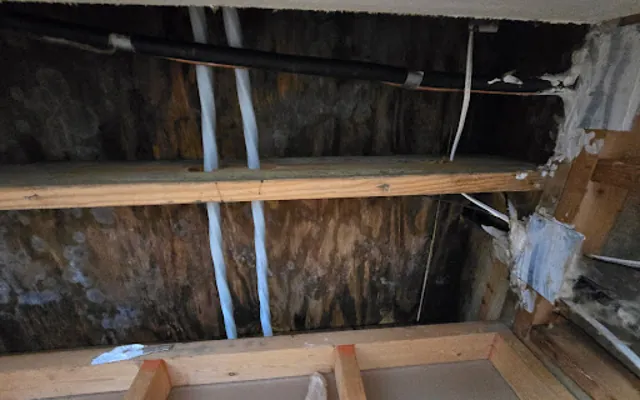
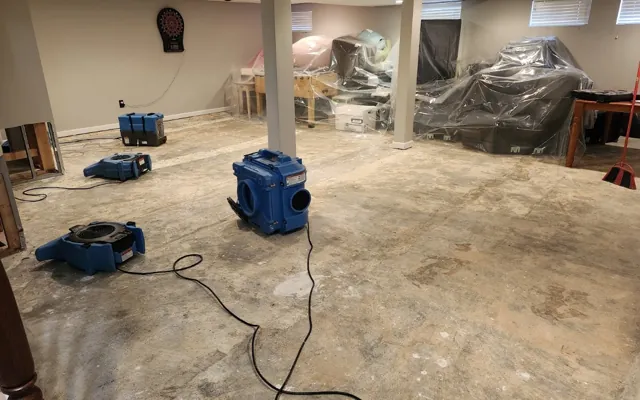
When meltwater from an ice dam enters a Ballpark, UT attic, local crews respond fast. They follow IICRC-standard methods to extract water, open up soaked ceilings, and dry the structure back to a documented dry standard for the homeowner.

The team first finds where the meltwater is entering from the ice dam. They extract any standing water inside the attic or ceiling and take steps to limit more water coming in while the dam remains.
Crews open saturated ceiling and wall cavities to see the full damage. They remove wet insulation and drywall that can't be saved and map how far the backed-up water traveled through the home's structure.
With air movers and dehumidifiers, technicians dry the framing and cavities. They take moisture readings in Ballpark homes to track progress until every area meets a documented, verified dry standard.

Ice dam water damage in Ballpark generally runs $1,800 to $8,000, depending on how much meltwater entered, how far it spread through ceilings and walls, and whether insulation and drywall must be replaced. A minor eave leak costs far less than water tracking across a whole ceiling. Crews document the source and moisture readings so a sudden covered event is clearly recorded for the carrier.
In Ballpark, older cottages with aging roof lines and newer infill homes alike face ice dams each winter. When meltwater backs up under shingles, it can quickly soak insulation and seep through ceilings into living spaces below. This is a common winter water event for this near-downtown neighborhood. Ballpark's high-desert winters bring cold snaps and heavy snow, which can melt and refreeze on older roof eaves. This cycle creates ice dams. Meltwater then gets behind shingles and into attics, especially on the neighborhood's mix of older and newer housing stock. From Ballpark, crews also cover nearby Capitol Hill, East Central, The Avenues, Central City, Fairpark, Liberty Wells. See every neighborhood and town on the full service area page.
See all areas servedEvery loss is photographed, measured, and logged from the first visit, so the paperwork holds up with the insurance carrier.
Technicians follow recognized IICRC drying standards and prove it with daily moisture readings on Ballpark homes, not guesswork.
Emergency dispatch any hour of the day or night, with a real crew on the way across the valley, not a callback in the morning.
A real crew dispatched any hour, not a callback in the morning.
Trained technicians following recognized IICRC drying standards.
Truck-mounted, portable, and submersible for any size loss.
The loss is documented and billed to the carrier directly.
Ice dams form when heat from the attic melts snow on the roof. The water runs down to the cold eave and refreezes, creating a dam. More meltwater then backs up behind it, often finding its way under shingles and into the attic space of a home.
Costs vary widely based on how much water entered and how far it spread. Minor eave leaks cost less, while water that travels across a whole ceiling and into walls is more. Local crews document the source and damage to help clarify the scope for a carrier.
Crews are on call 24 hours a day and can be on the way to Ballpark within the hour.
Call (801) 405-4247